Editors touch more than almost any other crew member.
They access raw footage, control project files, shape the narrative, and often work independently for long periods of time. When editor paperwork is vague or improvised, disputes usually don’t surface during production — they surface later, when deadlines are missed, materials aren’t returned, or ownership is questioned.
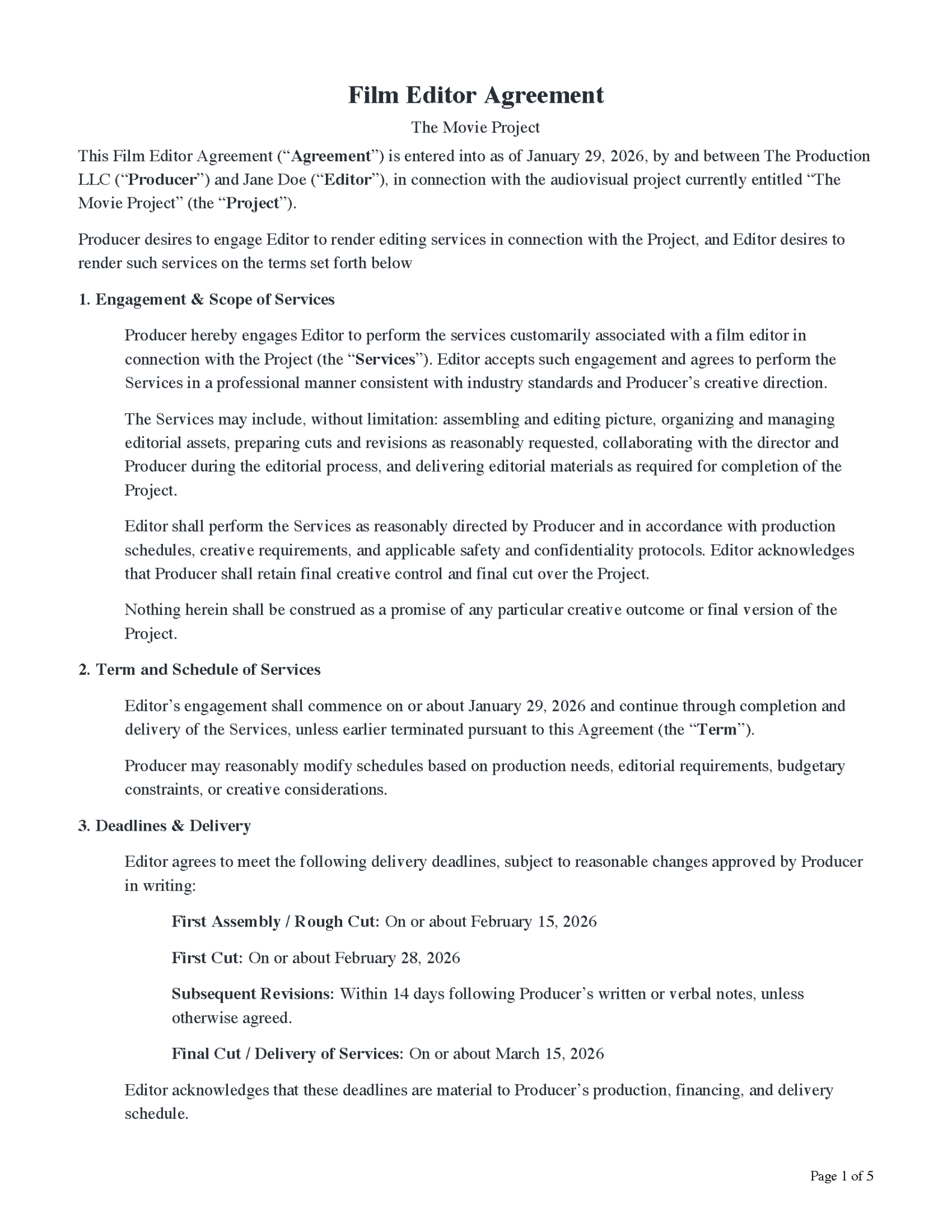
The Film Editor Agreement (Indie Standard) is designed to prevent those issues.
It clearly defines the editor’s role, secures ownership of all editorial work, establishes delivery deadlines, and protects the production’s control over footage and files — without over-lawyering or studio-level complexity.
What Filmmakers Get Wrong About Editor Agreements
These problems show up repeatedly on indie projects:
1. Using a generic crew agreement
Editors present unique risks around possession of footage, project files, and cuts that generic agreements don’t always address.
2. Leaving deadlines undefined
Without clear delivery timelines, producers lose leverage when editorial schedules slip.
3. Failing to lock down ownership
Edits, timelines, and project files are copyrightable. Ownership must be explicit.
4. Assuming editors can withhold materials for non-payment
Without a no-lien provision, productions can get stuck mid-post.
5. Treating editor compensation casually
Improvised payment terms are a common source of disputes, especially on low-budget films.
Why This Agreement Works
This Film Editor Agreement is intentionally drafted to:
- define editor services without promising creative outcomes
- establish clear editorial deadlines and revision timing
- secure work-for-hire ownership with assignment fallback
- confirm producer final cut and creative control
- prevent editors from withholding footage or files
- restrict unauthorized use of materials for reels or promotion
- accommodate common indie payment structures (net terms, split payments, upfront + balance)
- acknowledge employee vs. contractor classification without misclassification
It reflects how editor relationships actually work on independent productions.
Compensation (How This Is Handled)
This agreement guides producers toward common, defensible editor payment structures, including:
- lump-sum payment upon completion (net terms)
- split payments tied to commencement, first cut, and final delivery
- partial upfront payment with balance on completion
- unpaid participation for student or volunteer projects (where appropriate)
Open-ended or improvised compensation language is intentionally excluded to reduce disputes and compliance issues.
Why This Matters for Distribution & E&O
Editors are often asked to deliver project files, timelines, and assets long after post-production wraps.
Distributors and E&O insurers expect to see clear editor agreements that:
- confirm ownership of edits and files
- show that materials can be retrieved if needed
- eliminate claims of editorial control or liens
- support clean chain of title
This agreement is drafted with those downstream reviews in mind.
Frequently Asked Questions
No. This is a non-union editor agreement. Union productions must follow applicable guild agreements.
Yes. The agreement includes an unpaid option and is designed to be accessible for student and educational projects.
It does not misclassify. Classification depends on applicable law and how the engagement is structured.
No. This agreement expressly confirms producer final cut and creative control.
No. The agreement prohibits liens or withholding of project materials.
Post-production is where films are most likely to stall — and where bad paperwork causes the most damage.
This is the agreement indie filmmakers use to keep editorial work on track, ownership clean, and delivery problems out of the picture.