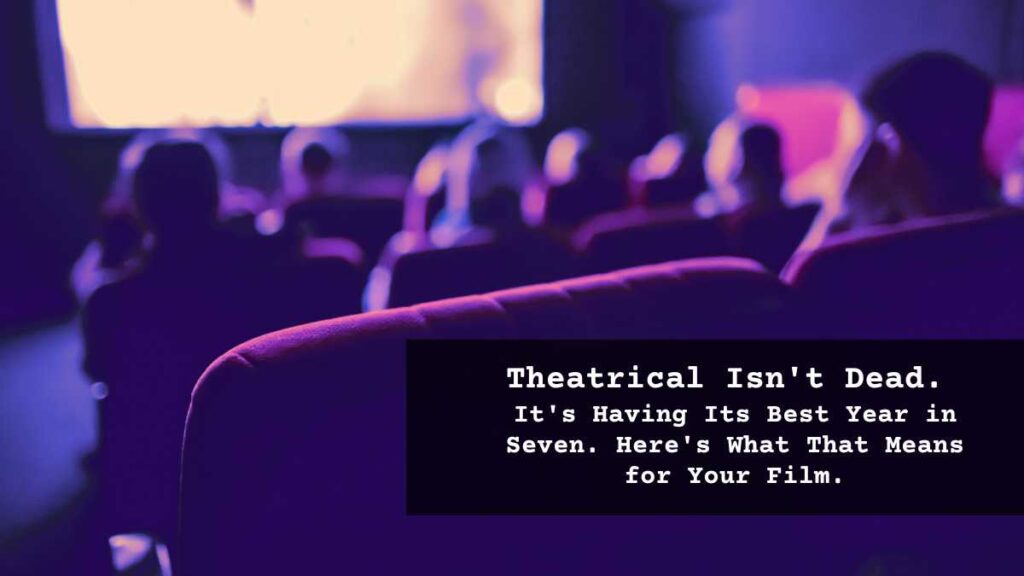

For years, the advice to independent filmmakers was almost a reflex: nobody goes to theaters anymore, make it for streaming, theatrical is dead. It became conventional wisdom so quickly that most people stopped questioning it.
The 2026 numbers don’t support it anymore.

The data that changed the story
This year, the domestic box office is on track to cross $10 billion for the first time since 2019, before the pandemic. Multiple films have already crossed a billion dollars worldwide, the most in a single year since Covid, and the summer came within a rounding error of matching pre-pandemic revenue.
But the raw dollars aren’t even the most interesting part. This one is.
According to a 2026 Fandango study of more than 5,000 moviegoers, 87% of Gen Z saw at least one movie in theaters over the past 12 months. Not 87% of moviegoers. 87% of the entire generation. That’s higher than millennials at 82%, Gen X at 70%, and baby boomers at 58%.
The generation everyone assumed had abandoned theaters for their phones is, in fact, the one showing up most.
And they’re not showing up casually. Gen Z averages around seven theater visits a year, accounted for nearly 40% of all North American moviegoers in 2025, and over-indexes on premium formats like IMAX and Dolby. They spend more per trip on concessions and premium screens than any other generation. For Gen Z, going to the movies isn’t a passive default; it’s a social event, a night out, something to post about, an experience streaming at home can’t replicate.
Why this matters more for you than for the studios
It would be easy to read those numbers and think they only benefit the tentpoles. Spider-Man and Nolan were always going to fill the biggest screens. But the more important shift for independent filmmakers is what the recovery is made of.
It isn’t only franchises. Some of the year’s genuine surprises were small, original, unorthodox films that the industry nearly overlooked. A horror film from a YouTube creator, made for a fraction of a studio budget, sold for eight figures and grossed hundreds of millions worldwide. Original stories, held in theaters week after week, when the assumption had been that anything without a pre-existing brand belonged on a streaming service.
That changes the room when you’re the one pitching.
Because when unusual, low-budget, original films break out in theaters, studios and distributors get braver. They start to believe an unexpected story might actually work on the big screen, and they become more willing to take a chance on one. A theatrical recovery built partly on surprises is a recovery that has room in it for films nobody saw coming, which is exactly the category most independent films fall into.

The honest caveat
None of this means theatrical is suddenly right for every indie film. It isn’t.
A small, quiet, dialogue-driven film with no theatrical hook may still be better served by a smart streaming or hybrid strategy. Theatrical releases carry real costs, marketing and prints and advertising among them, that come out before your backend. The right distribution path still depends entirely on your specific film, your audience, and your deal.
What the data does is remove the automatic assumption. For years, “make it for streaming” was the default answer before anyone had even seen the film. The 2026 numbers mean that assumption no longer holds by default. Theatrical is back on the table as a real, viable option worth genuinely considering, not one to dismiss out of hand.
What to actually do with this
If you’re developing or finishing a film, a few practical takeaways:
Don’t pre-concede theatrical. Don’t build your entire distribution strategy around the belief that no one will leave the couch for your film. That belief is now measurably out of date. Evaluate theatrical as a real option based on your film’s actual qualities, not on a blanket assumption about the market.
Understand your audience honestly. Gen Z’s moviegoing is social, event-driven, and discovery-fueled by social media and word of mouth. If your film has a hook that travels, something people want to see together and talk about afterward, that audience behavior works in your favor. Know whether your film is the kind of thing that benefits from a shared, in-person moment.
Know the money either way. Whether you go theatrical, streaming, or hybrid, the economics are what protect you. Understand P&A and how it recoups, understand your waterfall and where you sit in it, and understand what rights you’re granting and keeping. A theatrical opportunity is only good news if your deal is structured so you actually benefit from it.
Structure so you can choose. The filmmakers who benefit most from a shifting market are the ones whose rights and entity are structured cleanly enough to field competing offers and pick the best path. The ability to say yes to theatrical, or no to a streaming buyout, comes from having your ownership, chain of title, and agreements in order before the offers arrive.
The takeaway
The audience didn’t kill theatrical. They’re coming back to it, and increasingly, they’re young. That doesn’t mean every film belongs in a theater, but it does mean the reflexive “make it for streaming” is no longer the safe default it was sold as. Theatrical is a live option again, including, and maybe especially, for the films nobody saw coming.
Which could be yours. The question isn’t whether theaters are dead. They’re not. The question is whether your film, and your paperwork, are ready to take advantage if the theatrical door is the right one to walk through.