

When you finish a script — whether it’s a short film, TV pilot, or feature — it’s more than a story. It’s your creative asset. Registering it with the Writers Guild of America (WGA) is one of the fastest, simplest ways to protect your authorship before you share it with anyone in Hollywood.
Here’s how WGA registration works, why it matters, and what you need to know before you upload that script.

What Is WGA Registration?
The WGA’s registry gives you a timestamped record of authorship. That means if someone later claims they wrote your idea first, you can prove when your version existed.
Unlike U.S. copyright registration, which establishes legal ownership, WGA registration functions as evidence of authorship — useful for pitches, festival submissions, and arbitration.
It’s quick (usually under 10 minutes), affordable ($20–30), and done entirely online.
How to Register Your Script with the WGA
Here’s the basic process:
- Visit the WGAW Registry or WGAE Registry.
- Create an account — membership is not required.
- Upload your script in PDF format.
- Pay the registration fee ($10-$15 for WGA members, $20-$25 for non-members).
- Download or print your confirmation certificate for your records.
That’s it. Your registration is time-stamped and stored for five years (WGAW) or ten years (WGAE).
WGA vs. Copyright — What’s the Difference?
WGA registration protects your authorship timeline.
U.S. copyright registration protects your legal ownership.
Most professionals do both — WGA first for speed, copyright second for full enforcement rights.
| Feature | WGA Registration | U.S. Copyright Office |
|---|---|---|
| Purpose | Proof of authorship | Legal ownership & enforcement |
| Validity | 5–10 years | Life of author + 70 years |
| Cost | $20–30 | ~$65 |
| Process time | Instant | Several weeks |
| Enforcement | Evidentiary | Required to sue for infringement |
Why Indie Filmmakers Should Care
Even if you’re not a professional screenwriter, registering your script gives your production credibility. A WGA registration number tells investors, talent, and distributors that your project has documented authorship — a simple way to strengthen your chain of title.

FAQ:
Registering Your Script with the WGA
Yes! WGA registration is open to anyone, not just guild members. You simply create a free account on the WGA West or WGA East website and pay a small fee.
Both offer the same protection. Typically, writers on the West Coast use WGAW, while East Coast writers use WGAE. You don’t need to register with both — the timestamp holds the same legal weight either way.
WGAW registrations are valid for five years; WGAE keeps them for ten years. You can renew them anytime to extend coverage.
The registry accepts PDFs only. Make sure your file is locked and includes your name, title, and contact info on the title page.
Yes. The WGA allows registration of any written creative material, including treatments, outlines, pilots, or show bibles. Registering earlier drafts can help establish your timeline of development.
Not exactly. Ideas themselves aren’t protected — only the expression of those ideas (your written script or treatment). Registration simply proves when you wrote your version
Yes, if you want full legal ownership. WGA registration creates a timestamp; U.S. copyright registration gives you the right to pursue damages in court. Many professionals do both.
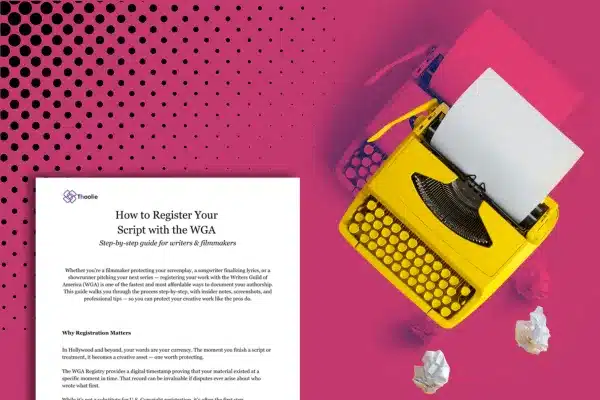
📄 Download the Free WGA Registration Step-by-Step Guide
Want a full walkthrough with screenshots and pro tips? Download is available Vault Insiders (sign up, it’s free!).
🔒 Studio Members Exclusive: Advanced WGA Insights
(This is the restricted content section)
Answers to advanced questions like “What happens if I revise my script?” “What if my co-author registers without me?” and “How to maintain version control.”
You've found subscriber-only content.
If you already have an account, please log in to continue.
Not a member yet? Join now to unlock exclusive templates, guides, and resources — free and paid tiers available.
Final Takeaway
Registering your script with the WGA isn’t about paranoia — it’s about professionalism. It shows you take ownership seriously and gives you documented proof of when your story existed.
You can’t control who gets inspired by your ideas — but you can control your paper trail.
🎬 Take ten minutes today to register your script — and protect your voice before you share it with the world.