Music clearance is one of the most common reasons independent films fail delivery.
Not because the music is bad—but because the paperwork doesn’t clearly establish who owns the rights, who granted permission, and how the music can be used.
Emails, text messages, and informal “permissions” are not sufficient for festivals, distributors, or E&O insurance. What they look for is a written agreement that clearly grants the necessary rights and closes the loop on future uses.
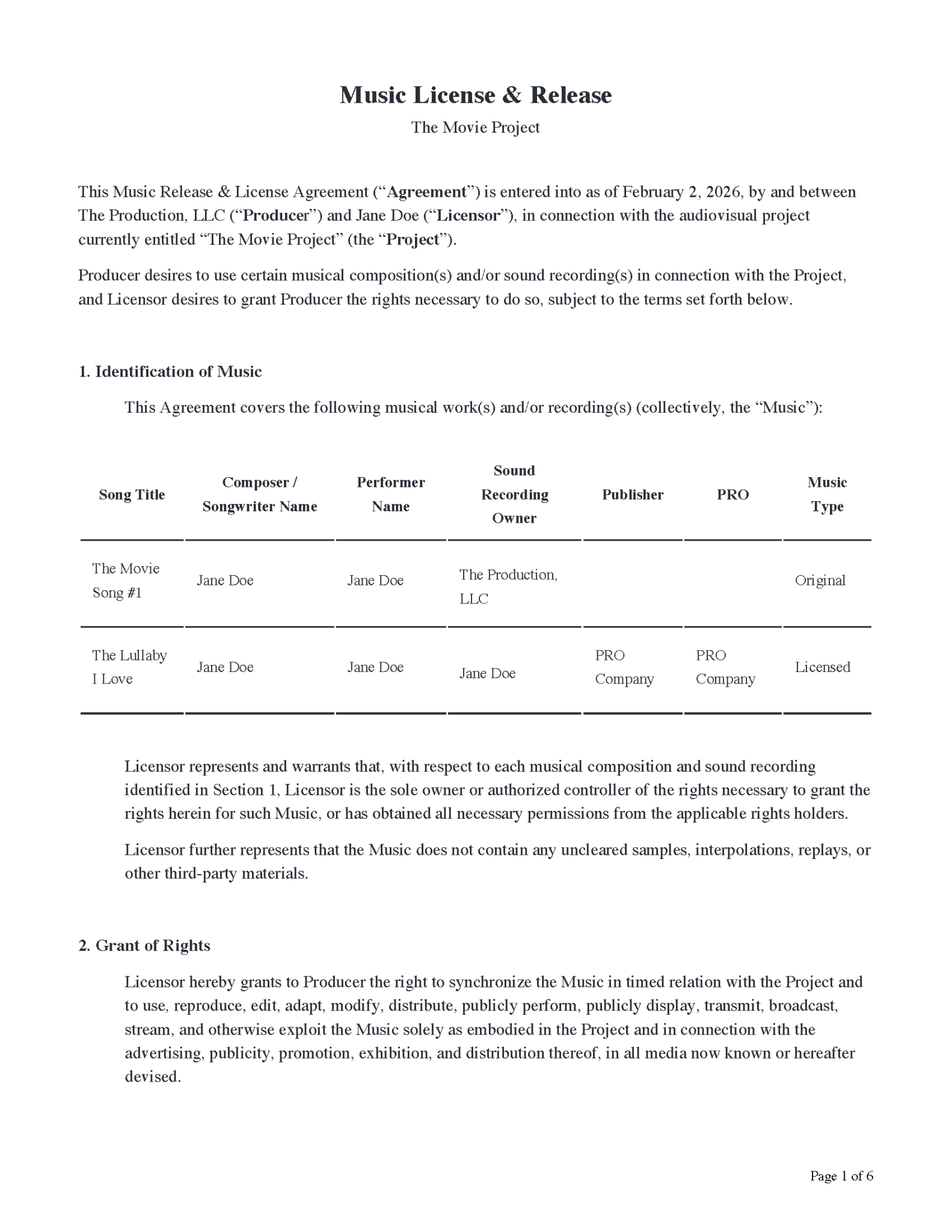
The Music Release & License (Indie Standard) is an attorney-drafted agreement designed to do exactly that.
Rather than using separate documents for composers, licenses, and releases, this agreement adapts to your actual situation—whether the music is original or licensed, paid or unpaid—so your contract reflects the real deal you made, not a generic template.
What Filmmakers Get Wrong About Music Clearance
Many indie filmmakers assume that:
- credit equals permission
- an email approval is enough
- music only needs clearance for distribution, not festivals
- composer agreements and sync licenses must be completely separate documents
In reality, distributors and insurers care about rights clarity, not intentions. If an agreement leaves future uses ambiguous—or fails to address ownership, moral rights, or sublicensing—the chain of title breaks.
This agreement is designed specifically to prevent those issues.
Why This Music Agreement Works for Festivals & Distribution
This Music Release & License is drafted to:
- cover both original compositions and licensed music in one agreement
- clearly allocate synchronization and master use rights
- support festival exhibition, promotion, and distribution
- address moral rights and name & likeness concerns
- include defensive language for soundtrack or ancillary uses without turning the agreement into a buyout
- feel fair and understandable to artists while remaining protective of the production
It’s the type of agreement distributors expect to see—and one artists are comfortable signing.
Why Not Just Use a Free Music Release Template?
Free templates don’t account for:
- festival and distributor requirements
- E&O insurance review
- moral rights issues
- soundtrack or ancillary use questions
- union or PRO obligations
- success scenarios where your short or feature suddenly scales
This agreement was drafted by entertainment attorneys who work with real productions—not scraped from the internet or generated by AI.
You’re not paying for pages. You’re paying for a clean chain of title when your film is ready to move.
Frequently Asked Questions
Yes. Informal arrangements are one of the most common causes of music clearance disputes later.
Yes. The agreement includes unpaid and courtesy-license options designed specifically for student and micro-budget films.
Yes, provided the licensor controls the necessary rights or discloses all third-party obligations.
No. Any soundtrack or ancillary use is optional, incidental to the film, and not a standalone exploitation unless separately agreed in writing.
Yes. This agreement is drafted to meet typical festival, distributor, and E&O expectations.
Final Takeaway
Music clearance isn’t about paperwork—it’s about whether your film can move forward.
The Music Release & License (Indie Standard) gives you a clear, professional agreement that protects your project now and later, without overcomplicating the deal or overreaching on artist rights.
Built by entertainment lawyers. Designed for real-world indie productions.